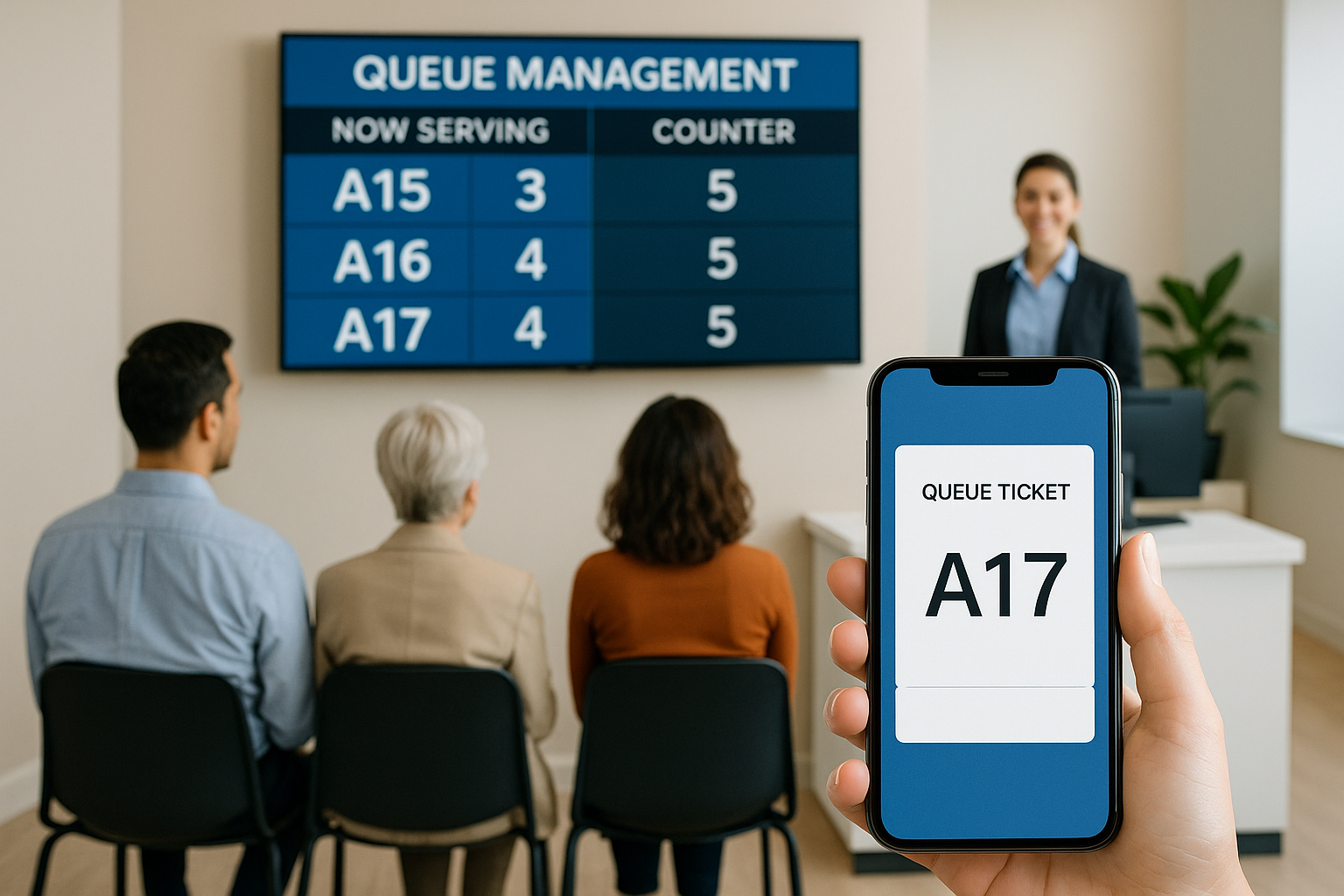
A Queue Management System is essential for any business that wants to deliver a smooth, efficient customer experience. Long, unorganized lines can frustrate customers, increase walkouts, and hurt your reputation. Whether you’re running a bank, hospital, government office, retail store, or service center, managing queues well is not just a nice-to-have feature—it’s critical. Customers value their time more than anything else, and they expect businesses to respect that. Investing in a Queue Management System shows them you care about their experience and are serious about delivering quality service.
A Queue Management System matters because it helps organize and streamline the waiting process. It reduces actual and perceived wait times and minimizes confusion. Customers appreciate clarity and predictability, and businesses that can deliver this win their loyalty. Studies like those discussed in Forbes highlight that time is the most important currency for customers. When you implement a good queue system, you’re not just managing lines—you’re respecting your customers’ time, which strengthens trust and boosts satisfaction. It also improves your operations. Employees spend less time dealing with crowd control and more time providing quality service. Managers get real-time insights on service demand and performance, helping them make better staffing and operational decisions.
A modern Queue Management System is much more than a number dispenser. It can include appointment scheduling to let customers book in advance, reducing peak congestion. Digital ticketing and virtual queues let customers wait comfortably elsewhere or even remotely via apps or SMS, cutting down physical crowding and making the experience less stressful. Real-time monitoring dashboards help staff and supervisors keep track of queue lengths and wait times instantly, enabling them to react quickly to any bottlenecks. Notifications through SMS or email keep customers informed about their place in line, reducing their anxiety. Advanced systems even provide data and analytics that help you understand wait times, service durations, and customer volumes, giving you the tools to optimize your operation continuously.
But having the right technology is only part of the answer. To get the most out of your Queue Management System, you need the right strategies. One effective approach is to segment and prioritize customers based on their needs. For example, a bank might route simple cash deposits to one queue and more complex loan consultations to another. This reduces bottlenecks and ensures customers get the right service as efficiently as possible. Offering multiple entry points is another powerful strategy. Allowing customers to join a queue through kiosks, mobile apps, websites, or even QR codes improves accessibility and reduces congestion at service counters.
Equally important is investing in staff training. Even the best system can fail if employees don’t know how to use it well or manage customers effectively. Staff should be trained not just on the technical aspects but also on how to communicate with customers, handle peak times confidently, and maintain a calm, welcoming atmosphere. The physical layout of your space also plays a big role. Clear signage, well-defined waiting areas, and comfortable seating all help reduce confusion and improve the overall experience while customers wait.
Predictive analytics is another key strategy for success. By analyzing historical data, businesses can forecast busy periods and plan accordingly. This might mean adjusting staff schedules, opening additional service counters during peak times, or even extending hours temporarily. Being proactive about managing demand helps avoid long lines before they start. Thoughtful planning and execution can transform your queue from a liability into an opportunity to impress customers.
Implementing a Queue Management System effectively requires planning. Start by assessing your needs and choosing the features that best match your business. Train your staff thoroughly so they’re confident using the system and helping customers understand it. Communicate clearly with customers about what to expect, how to use virtual queues, and what notifications they’ll receive. Once it’s in place, keep monitoring its performance. Gather data on wait times, service durations, and peak periods. Use these insights to keep refining your approach over time. Leading consultancies like McKinsey emphasize that operational excellence requires aligning technology, processes, and people—your queue system should be part of a broader strategy for continuous improvement.
In the end, a Queue Management System is more than just a tool—it’s a strategic investment in your brand, your operations, and your customers. By adopting thoughtful strategies like customer segmentation, multi-channel access, real-time monitoring, predictive analytics, and staff training, you can transform the customer experience and strengthen your competitive edge. Don’t leave customer satisfaction to chance. Invest in a robust Queue Management System today and deliver the seamless, efficient service your customers expect and deserve.
If you’d like help choosing the right system or want advice on implementing these strategies in your own business, don’t hesitate to reach out. Making this investment now can set you up for long-term success by turning waiting lines into an opportunity for engagement, trust, and loyalty.